How America Can Preserve Human Intelligence in the Age of Artificial Intelligence
America must remain capable without artificial intelligence and become stronger with it.
Artificial intelligence is expanding what people and institutions can accomplish. This book examines how America can gain those benefits while preserving the independent human and institutional competence required to reason, verify, decide, govern, challenge, and continue operating without AI.
● Kindle available now. Paperback and hardcover editions are in production.
What happens when technology becomes more capable while the people and systems around it become less able to reason, verify, decide, and continue without it?
This book is not an argument against artificial intelligence, and it is not a rejection of innovation. It accepts that AI can make people and institutions faster, more productive, and more capable, and it asks the United States to lead in building the most advanced systems in the world.
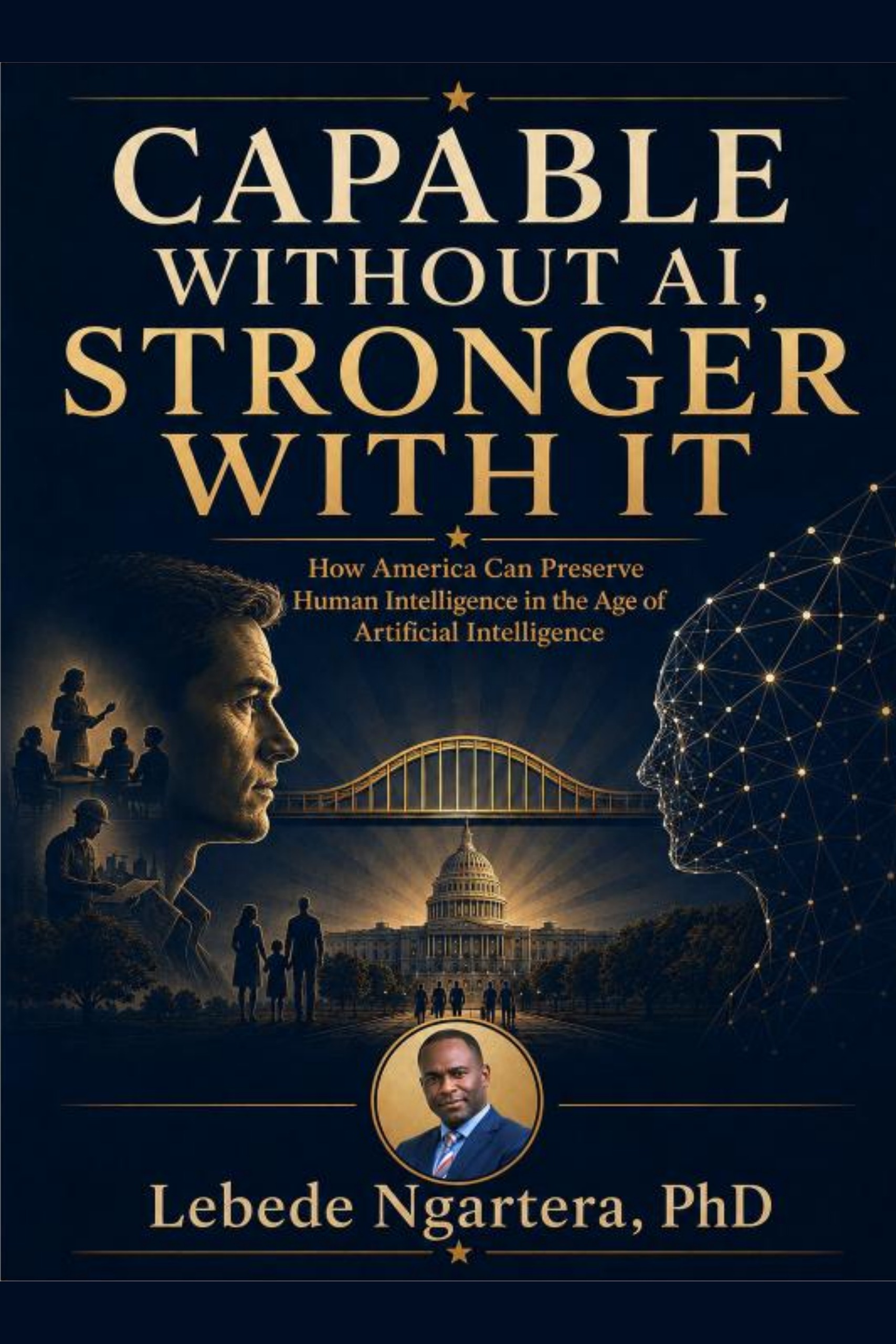
Its concern is narrower and more demanding. Capability produced with a machine is not the same as capability a person or institution can independently understand, verify, govern, and sustain. The book asks how to keep both alive at once.
The challenge is not artificial intelligence alone. It is capability without independence.
The book proposes a strategy of dual capability. America should build advanced technological systems while preserving the human and institutional competence needed to understand, verify, govern, challenge, and recover from them.
The minimum human and institutional abilities that must remain independently functional, whatever else technology is allowed to do.
The distance between what people can produce with AI and what they can still understand or accomplish without it.
A measure of whether technology increases immediate output while also strengthening long-term human capability, rather than quietly weakening it.
The ability of people and institutions to continue essential functions when AI is unavailable, compromised, or unreliable.
Technology designed to increase what people can eventually do for themselves, rather than creating permanent dependence.
The book develops each framework in depth, with cases from education, medicine, aviation, software, public administration, and national security.
Open on AmazonThe assignment gets finished. The capability never gets built.
Machine-assisted performance can look like human competence even when the underlying knowledge, judgment, or skill was never developed.
“Capable Without AI, Stronger With It reframes a pressing question with unusual clarity: how society can gain the benefits of artificial intelligence without eroding the human and institutional capability required to understand and govern it. Its proposed frameworks, the Dependency Gap and Net Human Development, are presented with appropriate scientific caution and establish a promising direction for formal research.”
Paperback and hardcover editions will be added when available.